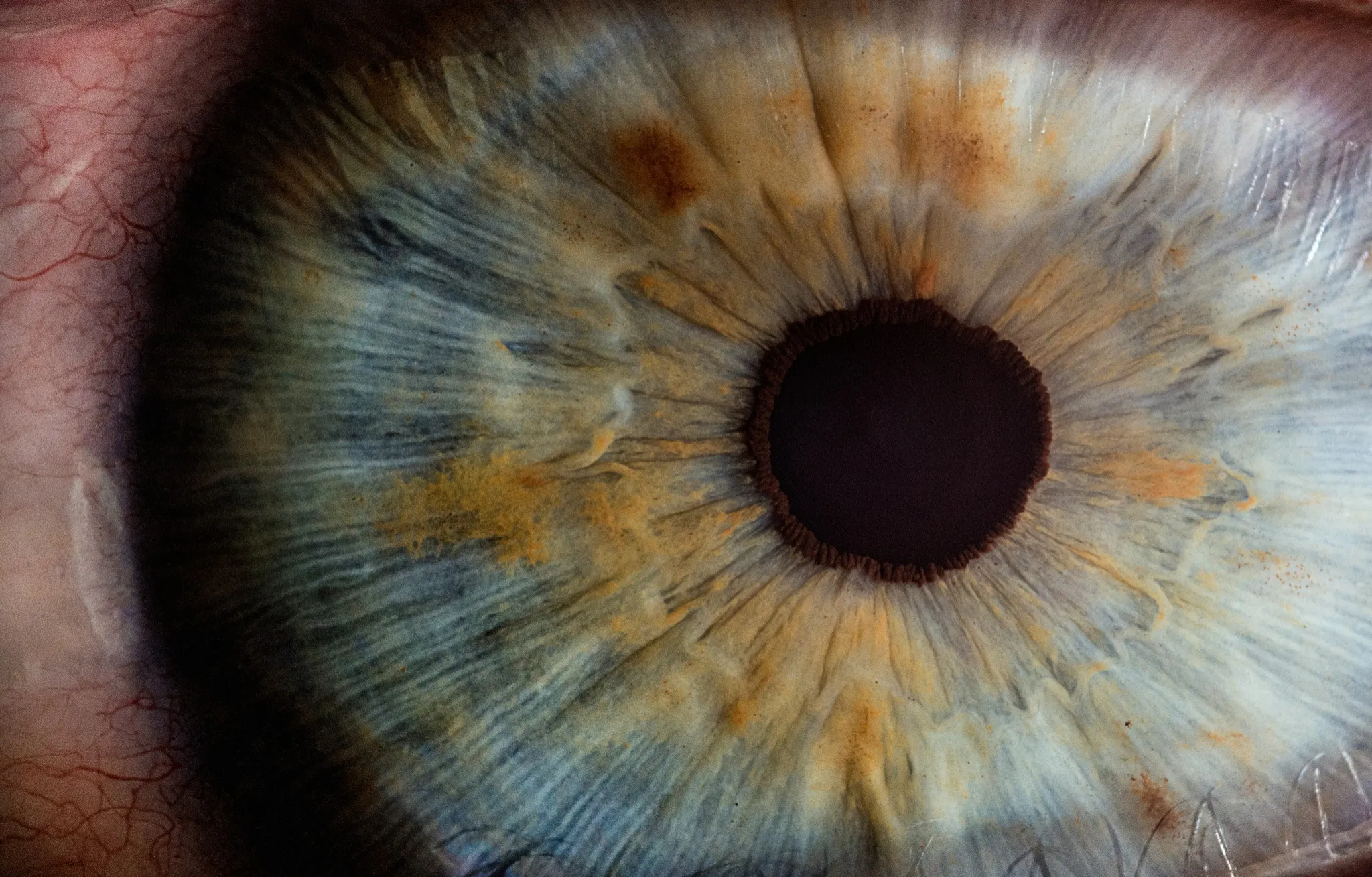
What’s a brainspot?
The eye position that connects to a memory or feeling.
We’re always brainspotting. You look away when you’re trying to remember something. Your eyes may fix on one place when you’re upset. Sometimes looking in a particular direction seems to increase the emotion or memory.
Brainspotting therapy uses your eye position to intentionally process something deep under the surface.
The eye position that connects to a memory or feeling.
We get specific about what you want to work on without requiring you to explain every detail.
I guide you through your visual field and we notice where the experience feels most connected.
You keep your gaze there and notice what comes up. I stay with you and help track the process rather than directing what you should think or feel.
An Oprah Daily writer tried Brainspotting and wrote about the session, what surfaced, and what she noticed afterward.
Brainspotting can involve talking, but talking is not the point. Thoughts, emotions, memories, images, physical sensations, or quiet stretches are all part of the process.
Brainspotting is at the heart of my treatment because it is a powerful way to work with:
You can give me context when it feels useful, but Brainspotting does not require a detailed retelling of an experience. We can work with what your brain and body are noticing without finding perfect words for all of it.
I use other modalities to supplement the Brainspotting work. We can talk, slow down, use parts-based work, focus on resources, add more tools to your toolkit, and sometimes not even use Brainspotting at all on a particular day.
Your brain and nervous system are involved in how your pain feels.
With chronic pain, I use Brainspotting to work with what physically hurts, as well as fear, stress, body memories, emotional experiences, and trauma. We can also use Brainspotting to strengthen experiences you want more of, like safety and confidence in your body!
This is not about convincing you that pain is “all in your head.” It is about working with the whole system instead of forcing pain into separate physical and emotional boxes.
Yes. We can use your eye positions through telehealth just as we would in an office.
Some people prefer online Brainspotting therapy because they feel more comfortable processing in their own space and fitting it into their own schedule.
It also lets me give my favorite homework! We can find eye positions that increase a feeling or belief you want more of, and you can return to those positions on your own. I help my clients create a “menu” of Brainspots they can use for support on their own. People especially like finding spots for confidence, peace, motivation, or even their Truest Self.
Colorado is home to the Rocky Mountain Brainspotting Institute, a community supporting Brainspotting education, training, and connection. I’m proud to be a Certified Brainspotting Therapist practicing in Colorado.
If you like seeing the experience, the research, and the numbers for yourself, here are a few places to start.
A first-person account of trying Brainspotting, including what the session felt like, what surfaced, and what the writer noticed afterward.
Forty adults worked with distressing memories using several approaches. Distress decreased after Brainspotting, EMDR, and body-scan meditation; Brainspotting and EMDR produced lower distress scores than body scan and the reading control after treatment and at follow-up.
Participants seeking treatment for PTSD were randomly assigned to five weeks of Brainspotting or treatment as usual. Both groups improved. Treatment as usual looked better immediately after treatment, while the Brainspotting group continued to show reductions in PTSD symptoms at follow-up, making the longer-term pattern especially interesting.
In a survey of 112 therapists with experience in EMDR, 82% reported that their clients responded “better” or “much better” to Brainspotting than EMDR. The paper also discusses early clinical research on Brainspotting and PTSD.
Thirteen women with severe PTSD received three Brainspotting sessions. PTSD scores dropped substantially on two established measures, with improvements still present at short-term follow-up.
You don’t need to fully understand Brainspotting or convince yourself it will work in order to benefit from it. It can work regardless! As a skeptic myself, I understand that sometimes you need to experience something yourself to see the results.
Book a free 15-minute consultation →